


Businesses collect massive customer data but often fail to turn it into insights. By analyzing data, segmenting customers, personalizing experiences, and continuously optimizing strategies, companies can boost engagement, loyalty, and revenue while staying competitive in a data-driven marketplace.
Companies collect enormous amounts of customer data every day, but most struggle to transform this information into meaningful insights. The difference between businesses that thrive and those that merely survive often comes down to how effectively they leverage data analytics to understand their customers and create personalized experiences.
This guide will walk you through the essential steps for using data analytics to gain deeper customer insights and implement successful personalization strategies that drive engagement, loyalty, and revenue growth.
Understanding the Foundation of Customer Data Analytics
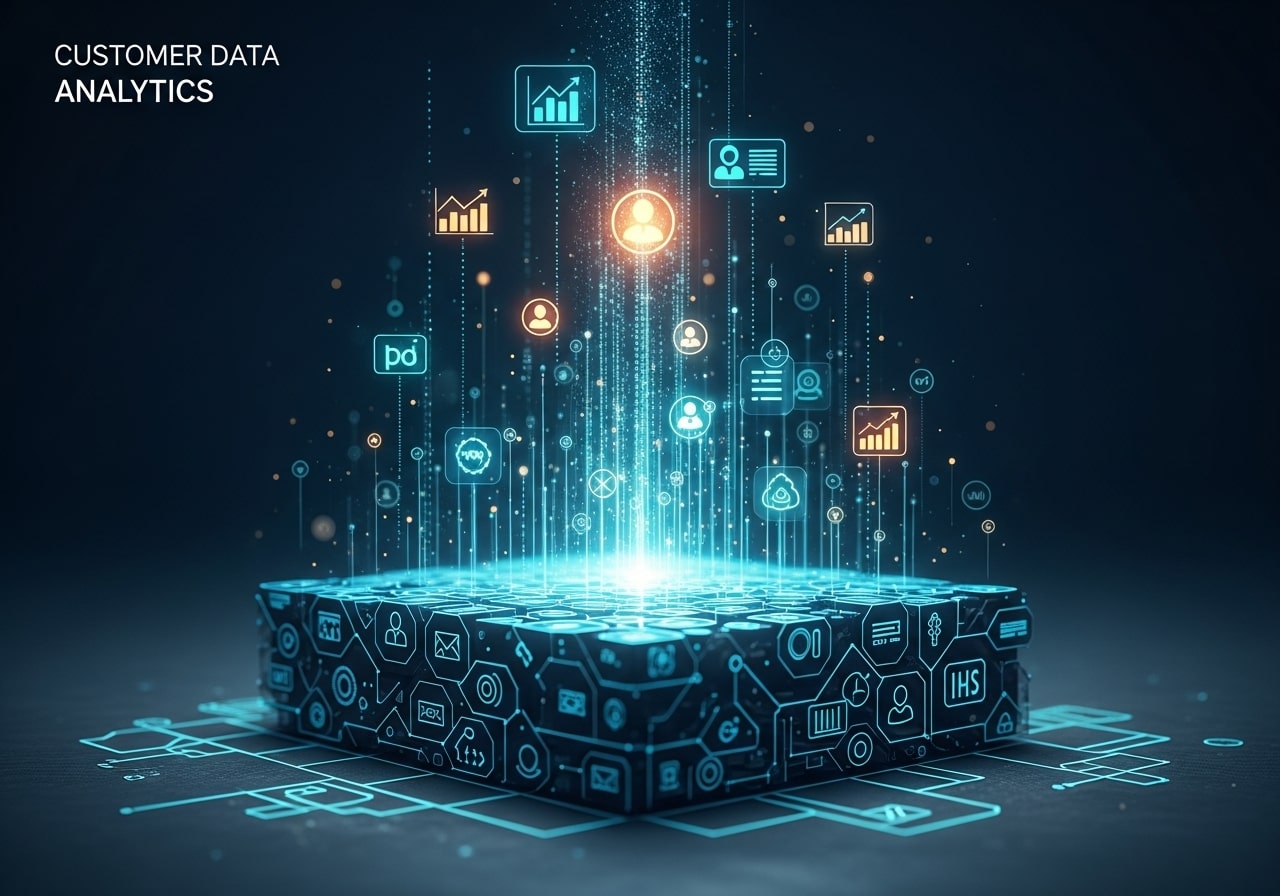
Data analytics involves examining raw data to uncover patterns, trends, and actionable insights about your customers. When applied to customer insights, it helps businesses understand who their customers are, what they want, and how they behave across different touchpoints.
Customer data typically falls into four main categories:
Demographic data includes age, gender, location, income level, and education. This information helps you understand who your customers are at a basic level.
Behavioral data tracks how customers interact with your brand across various channels. This includes website visits, purchase history, email engagement, social media activity, and customer service interactions.
Psychographic data reveals customer attitudes, interests, values, and lifestyle preferences. This deeper level of insight helps you understand why customers make certain decisions.
Transactional data provides detailed information about purchases, including frequency, timing, amount spent, and product preferences.
Collecting and Organizing Customer Data
Before you can analyze customer data, you need to collect it systematically. Modern businesses gather information through multiple channels, including websites, mobile apps, social media platforms, email campaigns, customer surveys, and point-of-sale systems.
The key to effective data collection is ensuring data quality and consistency. Implement standardized data collection processes across all touchpoints to avoid discrepancies and gaps in your customer profiles.
Consider using a customer data platform (CDP) to centralize information from various sources. This creates a unified view of each customer and makes it easier to identify patterns and opportunities for personalization.
Data privacy and compliance should be top priorities throughout your collection process. Ensure you’re following regulations like GDPR and CCPA, and be transparent with customers about how their data is being used.
Analyzing Customer Data for Actionable Insights
Once you have clean, organized data, the analysis phase begins. Start with basic segmentation to group customers based on shared characteristics or behaviors. Common segmentation approaches include:
Demographic segmentation groups customers by age, location, income, or other demographic factors. This helps you tailor messaging and offers to different life stages and circumstances.
Behavioral segmentation focuses on how customers interact with your brand. You might segment based on purchase frequency, average order value, or preferred communication channels.
Value-based segmentation ranks customers by their lifetime value or profitability. This helps you prioritize resources and create targeted retention strategies for your most valuable customers.
Predictive segmentation uses advanced analytics to identify customers who are likely to take specific actions, such as making a purchase or churning.
Advanced analytics techniques like machine learning and predictive modeling can uncover deeper insights. These tools can identify subtle patterns that humans might miss and predict future customer behavior with remarkable accuracy.
Implementing Personalization Strategies
Armed with customer insights, you can now create personalized experiences that resonate with individual customers and segments. Effective personalization goes beyond simply inserting a customer’s name into an email—it involves tailoring the entire experience based on their preferences, behavior, and needs.
Website personalization can include customized product recommendations, targeted content, and dynamic pricing. E-commerce sites often use browsing history and purchase data to suggest relevant products or show personalized homepage content.
Email personalization involves segmenting your email list and sending targeted messages based on customer behavior and preferences. This might include abandoned cart reminders, personalized product recommendations, or content tailored to specific interests.
Product recommendations use collaborative filtering and content-based filtering to suggest items customers are likely to purchase. These systems analyze past behavior and preferences to make intelligent suggestions.
Dynamic content adjusts website content, advertisements, and promotional offers based on who’s viewing them. This ensures each customer sees the most relevant information for their needs and interests.
Measuring Success and Optimization

Implementing data analytics and personalization is an ongoing process that requires continuous measurement and optimization. Establish key performance indicators (KPIs) that align with your business goals and track them consistently.
Important metrics to monitor include customer engagement rates, conversion rates, average order value, customer lifetime value, and retention rates. These metrics help you understand whether your personalization efforts are driving meaningful business results.
A/B testing is crucial for optimization. Test different personalization strategies, messaging approaches, and customer segments to identify what works best. Use statistical significance to ensure your results are reliable and actionable.
Customer feedback provides valuable qualitative insights that complement your quantitative data. Surveys, reviews, and direct feedback help you understand how customers perceive your personalization efforts and identify areas for improvement.
Overcoming Common Challenges
Many businesses face similar challenges when implementing data analytics for customer insights and personalization. Data silos are one of the most common obstacles—when customer information is scattered across different systems and departments, it becomes difficult to create a complete customer view.
Technical limitations can also hinder progress. Legacy systems may not integrate well with modern analytics tools, and some businesses lack the technical expertise to implement advanced analytics solutions effectively.
Privacy concerns and regulations add another layer of complexity. Balancing personalization with privacy protection requires careful consideration of data usage policies and transparent communication with customers.
Resource constraints often limit the scope of analytics initiatives. Start with small, focused projects that demonstrate value before scaling up your efforts.
Building a Data-Driven Culture
A successful analytics strategy starts with a company culture that values data. Employees at all levels should understand the importance of data-driven decision-making and how insights can improve customer experiences. Leadership support is critical to encourage the adoption of analytics tools and processes. Training staff to interpret and act on data helps reduce reliance on assumptions. When a business fosters a culture that prioritizes evidence over guesswork, teams can collaborate effectively, identify growth opportunities faster, and respond to customer needs with precision. Data-driven cultures create an environment where insights guide every major decision.
Integrating Multiple Data Sources
Customer data often comes from many channels, including websites, apps, social media, and offline interactions. Integrating these sources into a single, cohesive system ensures a complete view of the customer journey. Without integration, businesses risk data silos that lead to inconsistent insights and missed opportunities. Tools like Customer Data Platforms (CDPs) or data warehouses centralize information and allow for real-time analysis. Proper integration enables cross-channel personalization, more accurate segmentation, and better predictions of customer behavior. Bringing all data together ensures businesses have the context they need to make smarter, faster decisions.
Using Predictive Analytics

Predictive analytics uses historical data and machine learning to forecast future behavior, such as purchases, churn risk, or engagement trends. By anticipating customer needs, businesses can proactively offer relevant products or interventions. This approach allows companies to optimize marketing campaigns, reduce churn, and maximize lifetime value. Predictive models can also identify emerging trends and help prioritize high-value customers. When applied correctly, predictive analytics moves businesses from reactive strategies to proactive ones, increasing efficiency and personalization. The ability to forecast customer actions provides a competitive advantage by enabling smarter resource allocation and timely, targeted engagement.
Enhancing Customer Experience
Analytics and personalization directly improve customer experience by ensuring interactions are relevant, seamless, and satisfying. By understanding preferences, businesses can deliver tailored recommendations, dynamic content, and responsive service. A positive experience strengthens loyalty, encourages repeat purchases, and increases word-of-mouth promotion. Insights from customer behavior can also highlight pain points, allowing companies to improve processes and reduce friction. Personalized experiences are no longer optional; they are expected by customers. When businesses invest in thoughtful, data-driven strategies, they create memorable interactions that not only meet but exceed expectations, turning ordinary customers into advocates.
Leveraging Automation for Personalization
Automation enables businesses to scale personalization without overwhelming teams. Automated systems can send emails, show personalized website content, or trigger offers based on customer actions in real time. Machine learning algorithms can continuously refine recommendations based on behavior and preferences. Automation reduces manual work, increases consistency, and ensures timely engagement. By combining data-driven insights with automation, companies can provide relevant experiences at every touchpoint, from marketing campaigns to post-purchase follow-ups. Effective automation frees teams to focus on strategy and creativity while maintaining a high level of personalization for every customer, improving satisfaction and loyalty.
Continuous Improvement and Iteration
Data analytics and personalization are not one-time projects; they require ongoing refinement. Businesses should regularly analyze results, monitor trends, and adapt strategies to changing customer behavior. A/B testing, customer feedback, and new data sources help identify what works and what doesn’t. Iteration ensures campaigns stay relevant and effective while minimizing wasted resources. Continuous improvement fosters innovation and keeps companies agile in dynamic markets. By treating analytics and personalization as evolving processes rather than static solutions, businesses can consistently enhance customer experiences, strengthen loyalty, and maintain a competitive edge over competitors who rely on outdated or static strategies.
Moving Forward with Data-Driven Personalization
Data analytics has become essential for businesses that want to understand their customers and create meaningful personalized experiences. By collecting quality data, analyzing it effectively, and implementing targeted personalization strategies, you can build stronger customer relationships and drive sustainable business growth.
Start by auditing your current data collection and analysis capabilities. Identify gaps and opportunities for improvement, then create a roadmap for implementing more sophisticated analytics and personalization strategies. Remember that this is an iterative process—continuous testing, learning, and optimization will help you stay ahead of changing customer expectations and market conditions.
The businesses that master data analytics for customer insights and personalization will be the ones that thrive in an increasingly competitive marketplace. Take the first step today by evaluating your current approach and identifying opportunities to better leverage your customer data.
FAQ: Customer Data Analytics & Personalization
1. What is customer data analytics?
Customer data analytics is the process of examining customer information to uncover patterns and insights about who they are, what they want, and how they behave across different touchpoints.
2. What types of customer data should businesses collect?
Businesses should collect demographic data such as age, gender, location, income, and education, behavioral data like website visits, purchase history, email engagement, and social media activity, psychographic data that reveals interests, values, and lifestyle preferences, and transactional data including purchase history, frequency, amount spent, and product preferences.
3. How can businesses collect customer data effectively?
Data can be collected through websites, mobile apps, social media platforms, email campaigns, customer surveys, and point-of-sale systems. It is important to ensure that the data is accurate, consistent, and collected in compliance with regulations like GDPR and CCPA. Using a Customer Data Platform (CDP) can help centralize data from multiple sources.
4. What is customer segmentation and why is it important?
Customer segmentation is the process of grouping customers based on shared characteristics or behaviors. It helps businesses create more relevant and targeted marketing strategies. Common types include demographic segmentation based on age or location, behavioral segmentation based on purchase habits, value-based segmentation according to lifetime value, and predictive segmentation that identifies likely future actions.
5. How can data analytics improve personalization?
Data analytics allows businesses to tailor experiences to individual customers by customizing website content, recommending products based on behavior, sending targeted emails, showing dynamic content, and adjusting offers or pricing to match customer preferences.
6. What metrics should businesses track to measure success?
Businesses should monitor engagement rates, conversion rates, average order value, customer lifetime value, and retention rates. A/B testing and customer feedback are also essential to refine personalization strategies.
7. What are common challenges in using data analytics for personalization?
Common challenges include data silos where information is scattered across systems, technical limitations or lack of expertise, privacy concerns and regulations, and limited resources or budget to implement analytics initiatives.
8. How can businesses overcome these challenges?
Businesses can overcome challenges by starting with small, focused projects, centralizing data using a CDP, ensuring transparency and compliance with data regulations, and continuously testing, measuring, and optimizing personalization strategies.
9. Why is data-driven personalization important?
Data-driven personalization is important because it helps businesses build stronger customer relationships, increase loyalty, drive revenue growth, and remain competitive in a crowded marketplace.
10. What is the first step to getting started with customer data analytics?
The first step is to audit current data collection and analysis processes, identify gaps and opportunities, and create a roadmap for implementing advanced analytics and personalization strategies while continuously testing and optimizing.


