

Customer Data Platforms (CDPs) help businesses unify scattered customer data from multiple sources—websites, apps, emails, social media, and offline interactions—into a single, centralized database. Designed for marketers and customer experience teams, CDPs enable real-time analysis, identity resolution, and actionable insights without heavy technical expertise.
Understanding your customers has never been more critical—or more challenging. With data scattered across dozens of touchpoints, from social media interactions to purchase histories, businesses struggle to create a unified view of their customer base. Customer Data Platforms (CDPs) have emerged as the solution to this fragmentation, offering powerful data analysis capabilities that transform how organizations understand and engage with their audiences.
A Customer Data Platform is a software system that creates a centralized database of customer information by collecting data from multiple sources and touchpoints. Unlike traditional data management systems, CDPs are designed specifically for marketers and customer experience teams, making complex data analysis accessible without requiring extensive technical expertise.
This comprehensive guide will walk you through everything you need to know about Customer Data Platforms, from their core functionality to implementation strategies that deliver measurable results.
What Makes Customer Data Platforms Different

CDPs stand apart from other data management solutions through their unique approach to data collection and analysis. Traditional systems often require IT teams to manage data flows and generate reports, creating bottlenecks that slow decision-making. CDPs democratize data analysis by providing user-friendly interfaces that marketing teams can navigate independently.
The platform automatically ingests data from various sources—websites, mobile apps, email campaigns, social media, and offline interactions—creating unified customer profiles. These profiles update in real-time, ensuring that your data analysis reflects the most current customer behaviors and preferences.
Real-Time Data Processing
Unlike data warehouses that process information in batches, CDPs handle data streams continuously. This real-time capability enables immediate insights and responsive marketing actions. When a customer abandons their shopping cart, for instance, the platform can trigger automated follow-up campaigns within minutes rather than days.
Identity Resolution
One of the most powerful features of CDPs is their ability to connect anonymous website visitors with known customers across multiple devices and channels. Advanced identity resolution algorithms analyze behavioral patterns, email addresses, phone numbers, and other identifiers to create comprehensive customer profiles.
Core CDP Capabilities for Data Analysis
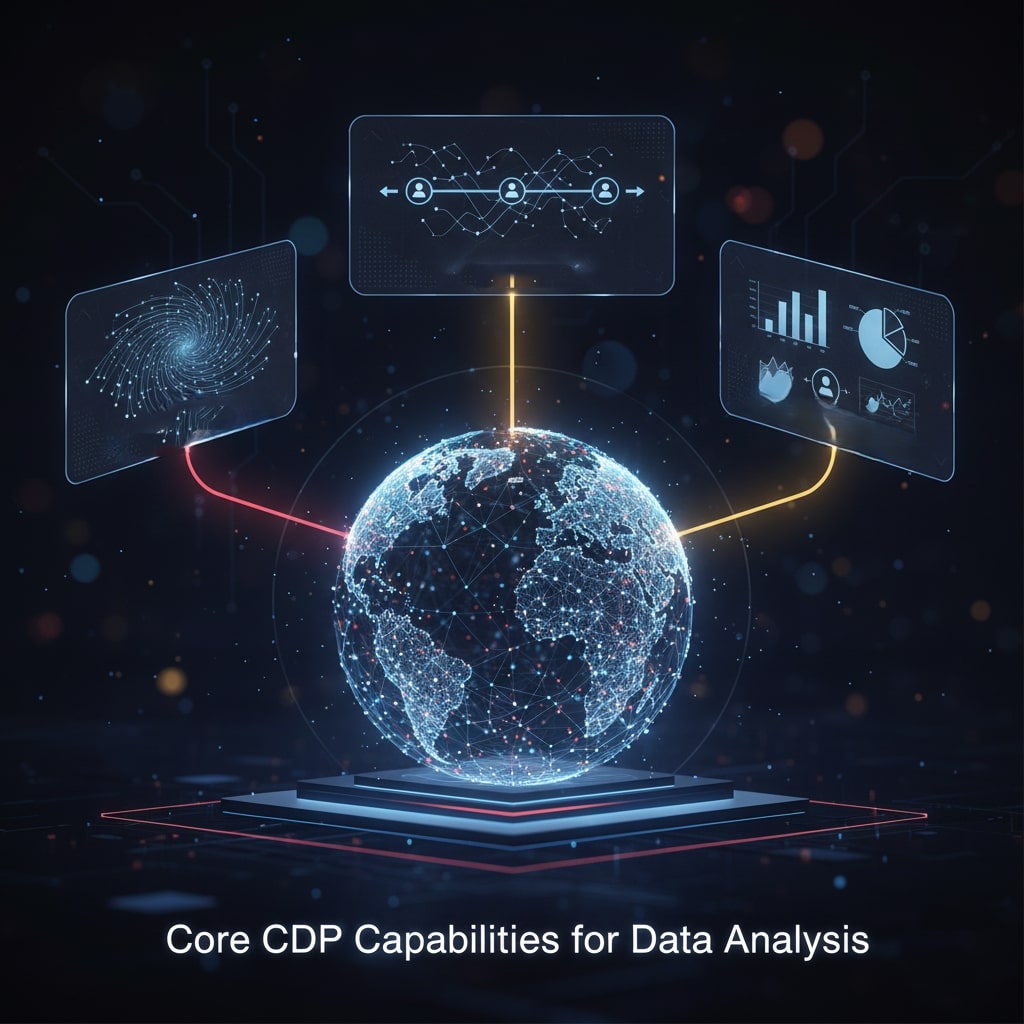
Modern Customer Data Platforms offer sophisticated data analysis tools that go far beyond basic reporting. These capabilities enable organizations to extract actionable insights from their customer data without requiring specialized data science expertise.
Behavioral Analytics
CDPs track customer interactions across all touchpoints, creating detailed behavioral maps that reveal purchasing patterns, content preferences, and engagement trends. This behavioral data analysis helps identify high-value customer segments and predict future actions.
Predictive Modeling
Advanced CDPs incorporate machine learning algorithms that analyze historical data to predict future customer behaviors. These models can forecast customer lifetime value, churn probability, and optimal timing for marketing communications.
Attribution Analysis
Understanding which marketing channels drive the most valuable customers requires sophisticated attribution modeling. CDPs analyze the complete customer journey, assigning appropriate credit to each touchpoint that influences conversion decisions.
Cohort Analysis
CDPs enable detailed cohort analysis, allowing businesses to track how different customer groups behave over time. This analysis reveals which acquisition channels produce the most loyal customers and how retention rates vary across different segments.
Benefits of Using CDPs for Data Analysis
Organizations that implement Customer Data Platforms typically see significant improvements in their ability to understand and serve their customers. The centralized data approach eliminates the silos that traditionally limit comprehensive analysis.
Enhanced Customer Insights
With all customer data consolidated in a single platform, businesses gain unprecedented visibility into customer preferences and behaviors. This comprehensive view enables more sophisticated segmentation strategies and personalized experiences that drive engagement and loyalty.
Improved Marketing ROI
Data analysis capabilities within CDPs help optimize marketing spend by identifying the most effective channels and campaigns. Businesses can shift resources toward high-performing activities while reducing investment in underperforming initiatives.
Faster Decision Making
Real-time data analysis eliminates the delays associated with traditional reporting processes. Marketing teams can quickly identify trends, test hypotheses, and adjust strategies based on current performance data rather than outdated reports.
Compliance and Privacy Management
Modern CDPs include robust privacy controls that help organizations comply with regulations like GDPR and CCPA. These platforms provide audit trails for data usage and enable customers to control how their information is collected and used.
Key Features to Look for in a CDP
Not all Customer Data Platforms offer the same level of data analysis capabilities. When evaluating options, consider these essential features that impact your ability to extract meaningful insights from customer data.
Data Integration Capabilities
The platform should connect seamlessly with your existing technology stack, including CRM systems, marketing automation tools, e-commerce platforms, and analytics software. Pre-built connectors reduce implementation time and ensure reliable data flows.
Advanced Segmentation Tools
Look for platforms that offer both rule-based and AI-driven segmentation capabilities. The ability to create dynamic segments that update automatically as customer behaviors change is crucial for effective personalization.
Visualization and Reporting
Comprehensive data analysis requires intuitive visualization tools that make complex insights accessible to non-technical users. Dashboards should be customizable and provide drill-down capabilities for deeper investigation.
API Access and Extensibility
Your CDP should offer robust API access that enables custom integrations and extends the platform’s capabilities. This flexibility ensures that the system can evolve with your business needs.
Implementation Best Practices
Successfully implementing a Customer Data Platform requires careful planning and a systematic approach to data analysis. Organizations that follow proven best practices achieve better results and faster time to value.
Start with Clear Objectives
Define specific goals for your CDP implementation before selecting a platform. Whether you’re focused on improving personalization, increasing customer lifetime value, or optimizing marketing spend, clear objectives guide platform selection and configuration decisions.
Audit Your Data Sources
Catalog all current data sources and assess their quality, completeness, and relevance. This audit helps prioritize which data streams to integrate first and identifies gaps that need to be addressed.
Establish Data Governance Policies
Create clear policies for data collection, storage, and usage that align with privacy regulations and business requirements. These policies should address data retention periods, access controls, and customer consent management.
Plan for Change Management
CDP implementation affects multiple teams and processes within your organization. Develop a comprehensive change management plan that includes training, communication, and ongoing support for users.
Measuring CDP Success Through Data Analysis

The success of your Customer Data Platform implementation depends on your ability to measure its impact on business outcomes. Establish baseline metrics before implementation and track improvements over time.
Customer Experience Metrics
Monitor improvements in customer satisfaction scores, Net Promoter Scores, and customer effort scores. These metrics reflect how effectively your enhanced data analysis capabilities translate into better customer experiences.
Marketing Performance Indicators
Track changes in conversion rates, customer acquisition costs, and marketing ROI. CDPs should enable more efficient marketing spend and higher conversion rates through better targeting and personalization.
Operational Efficiency Measures
Measure reductions in time spent on data preparation and report generation. CDPs should free up your team’s time for strategic analysis rather than manual data manipulation.
Common CDP Implementation Challenges
Organizations often encounter predictable challenges when implementing Customer Data Platforms. Understanding these potential obstacles helps ensure smoother deployments and better outcomes.
Data Quality Issues
Poor data quality is one of the most common barriers to effective data analysis. Inconsistent formatting, duplicate records, and incomplete information can compromise insights and decision-making. Address data quality issues systematically, starting with your most critical data sources.
Integration Complexity
Connecting diverse data sources with different formats and structures can be technically challenging. Work closely with your CDP vendor’s implementation team to ensure smooth data flows and maintain data integrity throughout the integration process.
User Adoption
The most sophisticated data analysis capabilities provide no value if your team doesn’t use them effectively. Invest in comprehensive training and ongoing support to ensure that users can leverage the platform’s full potential.
The Future of Customer Data Platforms

Customer Data Platforms continue to evolve rapidly, incorporating new technologies and capabilities that enhance their data analysis potential. Understanding these trends helps inform long-term platform selection and strategy decisions.
Artificial Intelligence Integration
AI and machine learning capabilities are becoming standard features in modern CDPs. These technologies automate complex analysis tasks and surface insights that human analysts might miss. Predictive analytics, automated segmentation, and intelligent recommendations are just the beginning.
Privacy-First Architecture
Increasing privacy regulations and consumer awareness are driving the development of privacy-first CDP architectures. These platforms incorporate privacy controls at the foundational level, ensuring compliance while maintaining analytical capabilities.
Real-Time Personalization
The ability to deliver personalized experiences in real-time based on current customer behavior is becoming a competitive necessity. Future CDPs will offer more sophisticated real-time analysis and activation capabilities.
Making Customer Data Work for Your Business
Customer Data Platforms represent a significant evolution in how businesses approach data analysis and customer understanding. By centralizing customer information and providing sophisticated analytical tools, CDPs enable organizations to move beyond basic reporting toward predictive insights and proactive customer engagement.
The key to success lies in selecting a platform that aligns with your specific business objectives and implementing it with a clear strategy for data governance and user adoption. Organizations that take a thoughtful approach to CDP implementation see substantial improvements in customer satisfaction, marketing efficiency, and business growth.
As customer expectations continue to rise and competition intensifies across industries, the ability to understand and respond to customer needs quickly becomes increasingly valuable. Customer Data Platforms provide the foundation for this understanding, transforming scattered data points into actionable insights that drive meaningful business outcomes.
Frequently Asked Questions (FAQ)
1. What is a Customer Data Platform (CDP)?
A Customer Data Platform is software that consolidates customer information from multiple sources into a unified database. Unlike traditional systems, CDPs are designed for marketing and customer experience teams, enabling them to analyze data and create actionable insights without deep technical expertise.
2. How is a CDP different from a CRM or data warehouse?
CRMs focus on managing customer interactions and relationships, primarily storing transactional and contact data. Data warehouses store large datasets for reporting and analysis but often require technical expertise. CDPs unify data from multiple channels in real-time, create comprehensive customer profiles, and provide tools for actionable marketing and personalization.
3. What types of data can a CDP collect?
CDPs can ingest data from online and offline sources, including website and app activity, email interactions, social media engagement, CRM data, purchase history, and loyalty programs. They can also connect anonymous and known customer data for comprehensive profiles.
4. How do CDPs handle real-time data?
CDPs process incoming data streams continuously, allowing immediate updates to customer profiles and triggering real-time actions such as personalized offers, abandoned cart follow-ups, or automated campaigns based on current behaviors.
5. What is identity resolution, and why is it important?
Identity resolution is the process of linking multiple identifiers across devices and channels to a single customer profile. It ensures that businesses can recognize and understand individual customers’ interactions and preferences, enabling more accurate personalization and marketing strategies.
6. How can CDPs improve marketing ROI?
By providing unified customer data and advanced analytics, CDPs enable marketers to identify high-value segments, optimize campaign targeting, and allocate resources toward channels and strategies that deliver the best results. This reduces wasted spend and increases conversion rates.
7. What features should I look for in a CDP?
Key features include robust data integration capabilities, real-time processing, advanced segmentation, behavioral analytics, predictive modeling, visualization tools, API access for custom integrations, and compliance/privacy management features.
8. How do I measure the success of a CDP implementation?
Measure improvements in customer experience metrics such as satisfaction scores, Net Promoter Scores, and retention rates. Track marketing performance indicators like conversion rates, acquisition costs, and ROI. Also, evaluate operational efficiency, such as reduced manual data processing time and faster reporting cycles.
9. What challenges might I face when implementing a CDP?
Common challenges include data quality issues, complex integrations with multiple systems, and low user adoption. Addressing these challenges requires proper planning, comprehensive training, data governance policies, and collaboration with the CDP vendor.
10. How is AI being used in modern CDPs?
AI enhances predictive modeling, automated segmentation, and real-time personalization. It can analyze large datasets to surface insights that humans might miss, predict customer behaviors, and recommend the best next actions for marketing or engagement.
11. Can CDPs help with privacy and compliance?
Yes. Modern CDPs include built-in privacy controls and tools to manage consent, comply with regulations like GDPR and CCPA, and provide audit trails for how customer data is collected and used.
12. How do I choose the right CDP for my business?
Evaluate your business objectives, data complexity, team capabilities, integration requirements, and budget. Choose a platform that aligns with your goals, supports future growth, and offers user-friendly tools to maximize adoption and value.


