

Product marketing teams face mounting pressure to prove their impact while navigating increasingly complex customer journeys. The solution lies not in gut instinct or outdated playbooks, but in the strategic application of data analysis to drive every major marketing decision.
Understanding Your Audience Through Data-Driven Segmentation
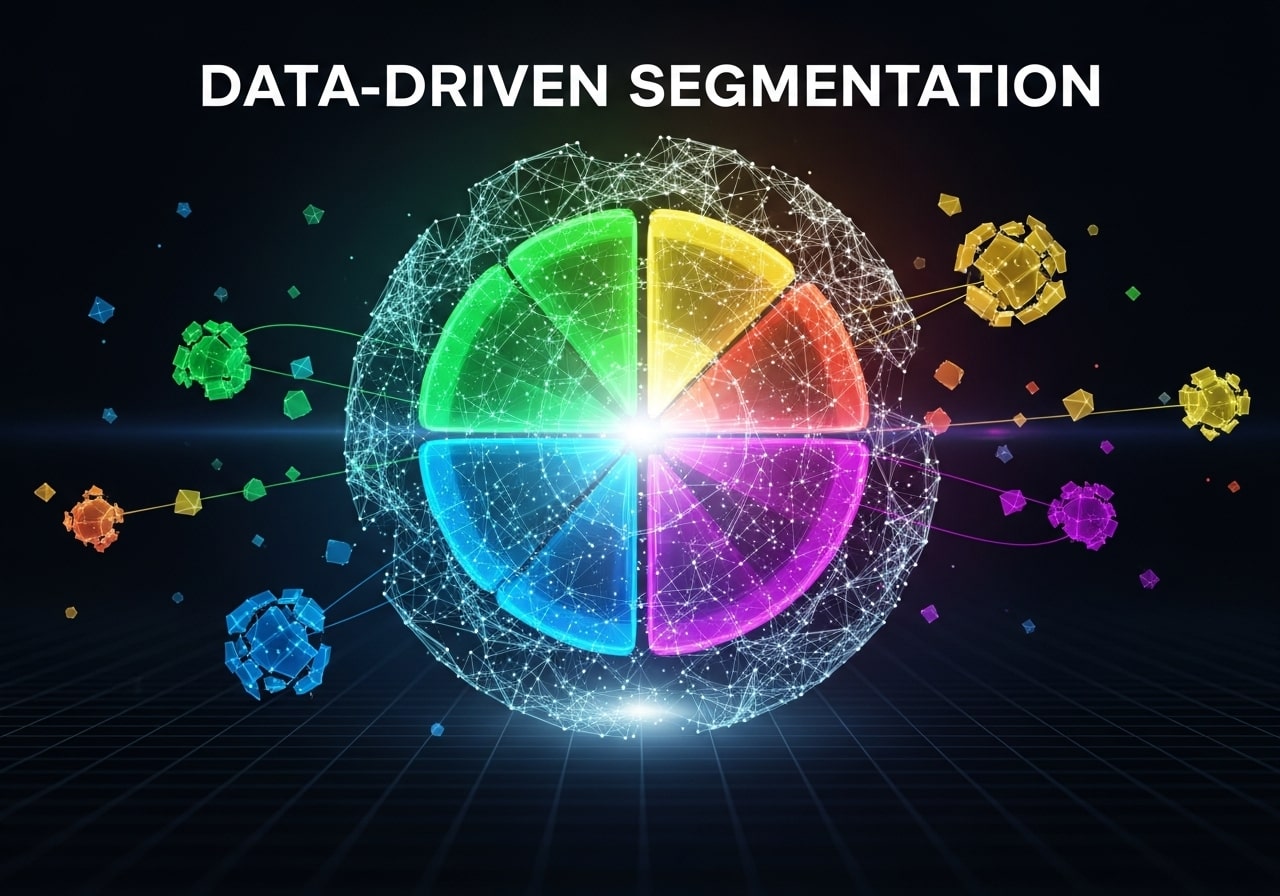
Effective product marketing begins with truly knowing your customers. Data analysis provides the foundation for creating detailed customer segments that go far beyond basic demographics.
Building Comprehensive Customer Profiles
Start by collecting behavioral data from multiple touchpoints. Website analytics reveal how prospects interact with your content, while CRM systems track the entire customer journey from first contact to purchase. Social media listening tools capture sentiment and preferences, painting a complete picture of your audience.
The most successful product marketers combine quantitative data with qualitative insights. Survey responses and customer interviews add context to the numbers, explaining the “why” behind customer behaviors. This dual approach creates robust customer personas that inform every marketing decision.
Identifying High-Value Segments
Not all customers are created equal. Data analysis helps identify which segments drive the most revenue and exhibit the highest lifetime value. Look for patterns in purchase behavior, engagement levels, and retention rates to prioritize your marketing efforts.
Advanced segmentation techniques like RFM analysis (Recency, Frequency, Monetary) reveal customer value tiers. Machine learning algorithms can uncover hidden segments based on complex behavioral patterns that humans might miss. These insights enable targeted marketing strategies that maximize return on investment.
Personalizing Marketing Messages
Once you understand your audience segments, data analysis guides message personalization. A/B testing reveals which headlines, value propositions, and calls-to-action resonate with each segment. Email marketing platforms provide detailed metrics on open rates, click-through rates, and conversion rates by segment.
Heat mapping tools show how different segments interact with your website and landing pages. This information helps optimize content placement and design elements for maximum impact. The result is marketing messages that feel personally relevant to each audience segment.
Analyzing Market Trends for Strategic Advantage
Data analysis transforms product marketers from reactive followers into proactive trend spotters. By monitoring the right metrics and signals, teams can anticipate market shifts and position their products accordingly.
Monitoring Competitive Intelligence
Competitor analysis tools track pricing changes, feature updates, and marketing campaigns across your competitive landscape. Social media monitoring reveals competitor sentiment and market share shifts. Patent filings and job postings provide early signals of strategic direction changes.
Search trend analysis shows shifting demand patterns and emerging keywords. Tools like Google Trends and SEMrush reveal seasonal patterns and geographic variations in market interest. This intelligence informs product positioning and go-to-market timing decisions.
Identifying Emerging Opportunities
Data analysis helps spot market gaps before competitors notice them. Customer support tickets and feature requests reveal unmet needs. Social media conversations highlight pain points that current solutions don’t address adequately.
Industry reports and market research provide macro-level trends, while customer behavior data reveals micro-trends specific to your market segment. Cross-referencing these data sources often uncovers profitable opportunities for product innovation or market expansion.
Predicting Market Shifts
Advanced analytics techniques enable predictive modeling for market trends. Time series analysis identifies cyclical patterns and seasonal fluctuations. Machine learning models can forecast demand changes based on economic indicators, competitor actions, and historical data.
Early warning systems alert marketing teams to significant changes in key metrics. This proactive approach allows teams to adjust strategies before market conditions impact performance. The ability to anticipate rather than react provides a significant competitive advantage.
Using Customer Feedback Data to Refine Positioning
Customer feedback is a powerful but often underutilized data source in product marketing. Reviews, surveys, support conversations, and in-app feedback reveal how customers actually perceive your product compared to how it is positioned. Analyzing this data helps identify gaps between intended messaging and real-world understanding. Patterns in language, recurring objections, and commonly praised features can guide sharper positioning and clearer value propositions. When feedback data is consistently reviewed and categorized, product marketers can refine messaging to better align with customer expectations, increasing relevance, adoption, and long-term satisfaction.
Data-Driven Decision Making Across the Product Lifecycle

Product marketing does not end at launch—it spans the entire product lifecycle. Data analysis supports smarter decisions during growth, maturity, and even decline stages. Usage data highlights which features drive engagement and which create friction. Retention metrics reveal when customers disengage and why. Market demand data informs expansion, bundling, or repositioning strategies. By continuously monitoring performance metrics at each lifecycle stage, product marketing teams can adapt strategies proactively, extend product relevance, and maximize revenue opportunities while avoiding costly misalignment with evolving customer needs.
Aligning Product, Sales, and Marketing with Shared Data

Misalignment between product, sales, and marketing teams often stems from fragmented data. A shared data foundation ensures all teams operate with the same customer insights, performance metrics, and priorities. When product marketers use shared dashboards and unified KPIs, messaging becomes more consistent and sales enablement improves. Sales feedback enriches marketing insights, while product usage data informs both positioning and roadmap decisions. This alignment reduces friction, accelerates execution, and creates a more cohesive go-to-market strategy driven by evidence rather than assumptions.
Optimizing Product Launches with Data-Driven Insights

Product launches represent major investments and opportunities. Data analysis significantly improves launch success rates by informing every aspect of the go-to-market strategy.
Pre-Launch Market Validation
Before committing resources to a full launch, data analysis validates market demand and optimal positioning. Beta testing programs generate usage data and feedback that guide final product adjustments. Landing page tests measure interest levels and identify compelling value propositions.
Pricing analysis using competitor data and customer willingness-to-pay surveys establishes optimal price points. Channel partner feedback provides insights into sales enablement needs and market positioning challenges. This validation process reduces launch risks and improves success probability.
Launch Timing Optimization
Data analysis determines the optimal launch timing by examining seasonal patterns, competitive activities, and internal capacity constraints. Historical launch data reveals which timeframes generate the highest market attention and conversion rates.
Economic indicators and industry event calendars influence timing decisions. Customer buying cycle analysis shows when prospects are most likely to evaluate new solutions. Coordinating launch timing with these factors maximizes market impact and adoption rates.
Real-Time Launch Monitoring
Once launched, continuous data monitoring enables rapid optimization and course correction. Web analytics track traffic patterns and conversion funnels. Social media monitoring reveals market reception and sentiment changes.
Sales data provides immediate feedback on market traction and channel effectiveness. Customer support metrics indicate potential product issues or messaging confusion. Real-time dashboards alert teams to performance variations, enabling quick responses to emerging challenges or opportunities.
Measuring Campaign Effectiveness Through Analytics
Product marketing campaigns require ongoing measurement and optimization to achieve maximum impact. Data analysis provides the insights needed to refine strategies and improve results continuously.
Establishing Key Performance Indicators
Successful measurement starts with selecting the right KPIs aligned with business objectives. Awareness campaigns focus on reach and brand mention metrics. Lead generation campaigns prioritize conversion rates and cost per lead. Customer retention campaigns track engagement scores and churn rates.
Leading indicators provide early signals of campaign performance, while lagging indicators confirm final results. Balancing these metrics creates a comprehensive measurement framework that guides both tactical adjustments and strategic decisions.
Attribution Modeling for Accurate ROI
Multi-touch attribution models reveal how different marketing channels contribute to conversions. First-touch attribution shows which channels generate initial awareness. Last-touch attribution identifies closing factors. Linear attribution distributes credit across all touchpoints equally.
Advanced attribution models use machine learning to weight touchpoints based on their actual influence on conversion probability. This sophisticated analysis enables accurate budget allocation and channel optimization decisions.
Campaign Optimization Strategies
Continuous testing and optimization improve campaign performance over time. A/B testing compares different creative approaches, messaging strategies, and channel combinations. Multivariate testing examines how multiple variables interact to influence outcomes.
Performance data guides budget reallocation between high-performing and underperforming elements. Audience insights reveal opportunities for expansion into new segments or channels. Regular optimization cycles ensure campaigns maintain peak effectiveness throughout their lifecycle.
Advanced Analytics Techniques for Future Success
The future of product marketing lies in sophisticated analytical approaches that provide deeper insights and predictive capabilities.
Machine Learning Applications
Machine learning algorithms identify complex patterns in customer behavior that traditional analysis might miss. Clustering algorithms discover new customer segments based on subtle behavioral similarities. Recommendation engines personalize content and product suggestions for individual users.
Natural language processing analyzes customer feedback and social media mentions to extract sentiment and topic insights. Predictive models forecast customer lifetime value and churn probability, enabling proactive retention strategies.
Predictive Analytics for Strategic Planning
Predictive analytics transforms historical data into future insights. Demand forecasting models help plan inventory and resource allocation. Customer journey modeling predicts optimal touchpoint sequences for different segments.
Scenario modeling tests how different market conditions might impact marketing performance. This capability enables contingency planning and risk management. Teams can prepare multiple strategies based on various potential futures.
Integration and Automation
Modern marketing technology stacks integrate data from multiple sources into unified platforms. Customer data platforms (CDPs) create single customer views across all touchpoints. Marketing automation platforms use this data to trigger personalized campaigns and responses.
Real-time data processing enables immediate responses to customer actions and market changes. Automated alerts notify teams of significant performance variations or opportunities. This integration reduces manual work while improving response speed and accuracy.
Building a Data-Driven Marketing Culture
Success with data analysis requires more than just tools and techniques. Organizations must cultivate a culture that values data-driven decision-making at every level.
Invest in team training and development to build analytical capabilities. Establish clear processes for data collection, analysis, and action. Create feedback loops that connect analytical insights to business outcomes.
The most successful product marketing teams treat data analysis as a core competency rather than a supporting function. They question assumptions, test hypotheses, and let evidence guide their strategies. This approach leads to more effective campaigns, better customer relationships, and stronger business results.
Data analysis will only become more important as customer expectations rise and competitive pressures intensify. Product marketers who master these analytical approaches today will lead their industries tomorrow.
Frequently Asked Questions (FAQ)
1. What is data-driven product marketing?
Data-driven product marketing is an approach where decisions about positioning, messaging, launches, and campaigns are guided by data analysis rather than intuition. It uses customer behavior, market trends, and performance metrics to optimize marketing strategies.
2. Why is data analysis important for product marketing teams?
Data analysis helps product marketing teams understand customer needs, identify high-value segments, optimize campaigns, and measure ROI accurately. It reduces guesswork and enables more consistent, scalable decision-making.
3. What types of data are most useful in product marketing?
Key data sources include website analytics, CRM data, customer feedback, social media insights, sales performance data, and market research. Combining behavioral, transactional, and qualitative data provides the most complete view.
4. How does data-driven segmentation improve marketing performance?
Data-driven segmentation allows marketers to group customers based on real behavior, preferences, and value rather than assumptions. This leads to more personalized messaging, higher engagement rates, and better conversion outcomes.
5. What KPIs should product marketers track?
Common KPIs include customer acquisition cost (CAC), conversion rates, customer lifetime value (CLV), engagement metrics, churn rate, and campaign ROI. The right KPIs depend on the campaign goal and funnel stage.
6. How can data improve product launch success?
Data helps validate demand, refine messaging, choose optimal launch timing, and monitor real-time performance. By analyzing early signals, teams can quickly adjust strategies to improve adoption and reduce launch risk.
7. What role does predictive analytics play in product marketing?
Predictive analytics uses historical data to forecast future outcomes such as demand, churn, or customer lifetime value. This allows marketers to plan proactively and allocate resources more effectively.
8. How can small teams implement data-driven marketing?
Small teams can start with basic tools like Google Analytics, CRM reports, and email performance data. Focusing on a few key metrics and simple experiments can deliver strong insights without complex infrastructure.
9. What challenges do teams face with data-driven marketing?
Common challenges include poor data quality, siloed systems, lack of analytical skills, and unclear KPIs. Addressing these issues requires better integration, training, and governance processes.
10. How do you build a data-driven marketing culture?
A data-driven culture is built by encouraging experimentation, training teams in analytics, setting clear measurement frameworks, and consistently using data to inform decisions. Leadership support and clear processes are essential for long-term success.


