When you’re studying software engineering, deciding what to minor in is a big deal. While the tech sector increasingly touts the value of data-driven decision making, analytics has become one of the most exciting career paths in tandem with software engineering. But is a minor in analytics right for you?
In this blog we will examine the convergence of software engineering and analytics, discuss the advantages to having both skill sets, discuss relevant job opportunities, and give you advice on choosing the right courses to invest in for this potent duo.
How Analytics Complements Software Engineering
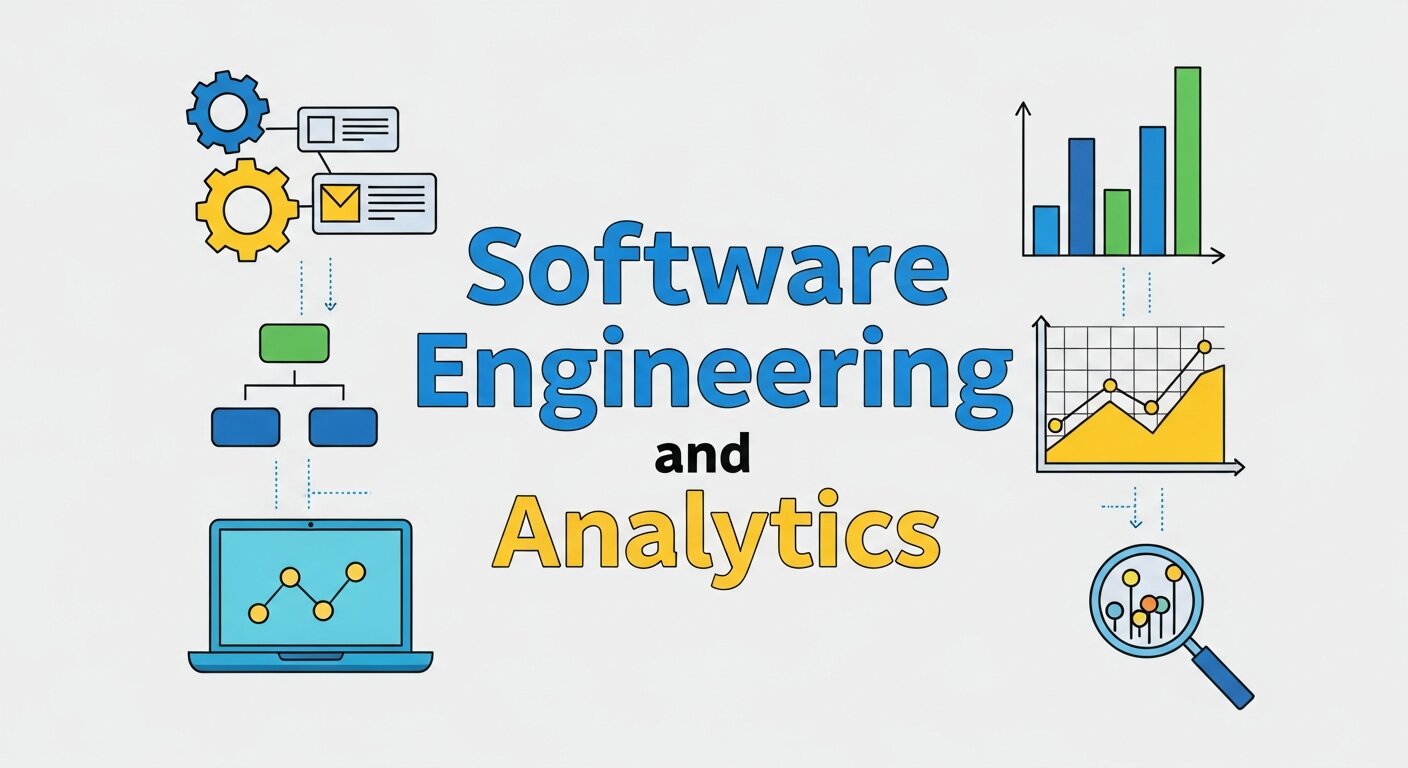
Software engineering revolves around the constructing, testing, and maintenance of large software systems, while analytics is about discovering key insights from data to help make more intelligent decisions. These fields may seem disparate at first glance, but together, these disciplines can add up to a strong skill set.
Analytics provides a powerful level of data-driven problem solving to software development. For example, learning how to wield analytics tools can enable engineers to build better user experiences by collecting and interpreting customer feedback. Analytics can also help in software development by giving insights on the performance and possible scaling/bottlenecks of the system.
Synergy is obvious on product development teams Whose engineers analyze user data for signs of improvement. “The skill to bridge implementation with meaningful data insights is your superpower, and the team wouldn’t be the same without it.”
Why Minoring in Analytics is a Smart Move
1. Enhanced Problem-Solving Skills
Analytics also gives you the ability to solve problems systematically, break down bigger data, and explain results in meaningful ways. Developed in a humanist framework, these intellectual skills can act as a counterpoint to a software engineer’s problem-solving mindset, enabling you to more effectively analyze and solve challenging technical problems in software systems.
2. Improved Decision-Making
A familiarity with analytics allows you to make decisions based on hard data instead of gut feelings. It doesn’t matter if you’re creating a machine learning algorithm or optimizing software for scale; analytics is how you make decisions that have an impact.
3. Broader Knowledge for Cross-Functional Collaboration
Cross-functional collaboration is what keeps the tech industry running. Teams are typically comprised of software engineers, data scientists and business analysts. Software engineers need to learn to at least speak the same language as folks on the analytics side and to gain an understanding of their business context.
4. Future-Proof Your Career
And the need for those who can code and call themselves analysts is booming. And roles that require artificial intelligence, data science and machine learning are only getting stronger, per LinkedIn’s Emerging Jobs Report. Arming yourself with analytics allows you to be adaptable in a rapidly changing tech space.
Dynamic Career Opportunities with Software Engineering and Analytics
Combining software engineering with analytics opens up a wealth of career opportunities. Here are just a few pathways you could consider:
- Data Engineer: Use your engineering skills to develop and maintain systems that organize and process large datasets. Your analytics background will help fine-tune these pipelines for optimal performance.
- Machine Learning Engineer: Create and deploy machine learning models that require strong programming expertise. Analytics knowledge enhances your ability to interpret model performance and adjust accordingly.
- Business Intelligence (BI) Developer: Build tools and platforms to visualize data and generate reports, bridging the gap between technical implementation and business decision-making.
- Product Manager: Leverage your technical and analytical skills to guide software development while keeping the user and business goals in mind. Analytics knowledge can also come in handy for assessing product performance.
- Full-Stack Engineer with a Focus on Data: Many companies seek engineers who can build scalable systems while integrating predictive data analytics into their products.
The common thread? You’ll be in a position to deliver results that both solve technical challenges and drive informed business strategies.
Courses To Build Your Foundation in Analytics
As a software engineering student, your curriculum likely emphasizes programming, algorithms, and systems design. Adding an analytics minor will introduce key quantitative and analytical thinking skills. Here are some courses worth exploring:
- Introduction to Statistics and Probability: Learn the essential concepts of statistics that form the backbone of data analysis.
- Data Visualization: Understand how to transform raw data into clear, compelling visuals that communicate effectively.
- Machine Learning Basics: Explore algorithms and approaches for creating predictive models.
- Database Management Systems: Gain proficiency in managing, querying, and analyzing large datasets.
- Big Data Technologies: Get hands-on experience with tools like Hadoop or Spark that handle massive data volumes.
- Predictive Analytics: Learn to use data-driven techniques for forecasting trends and outcomes.
- Python for Data Analysis: Build your programming skills in Python and apply them to real-world analytics use cases.
A combination of these courses will provide you with broad exposure to analytics, making you well-prepared to tackle real-world challenges.
Expert Insights on Software Engineering and Analytics
To get a deeper understanding of this combination, we turned to experts in the field. Dr. Maria Lopez, a professor of computer science and data analytics, shares, “The intersection of software engineering and analytics is where innovation happens. Companies today rely on engineers who can not only build software but also extract insights to improve it continuously. A minor in analytics equips students with this dual capability, making them extremely attractive candidates in the job market.”
Similarly, Alex Nguyen, a machine learning engineer at a leading tech company, said, “Analytics has been a game-changer for my work. Writing efficient code is one thing, but understanding its impact on users through data is what takes projects to the next level.”
These testimonials highlight the real-world value of possessing both technical and analytical prowess.
Accelerating Your Learning Beyond the Classroom
While a formal degree provides strong theoretical foundations, many students choose to strengthen their practical skills through intensive programs like a Data Analysis Bootcamp. These short-term, hands-on experiences focus on real-world datasets, collaborative projects, and industry-relevant tools. For software engineering students, this type of immersion can sharpen problem-solving abilities and improve confidence in handling live data environments. Bootcamps often emphasize applied learning, helping you bridge the gap between academic concepts and professional expectations. By participating in additional training opportunities, you expand your technical versatility and demonstrate initiative to future employers. This proactive approach can significantly enhance your portfolio and prepare you for competitive roles in technology-driven industries.
Turning Raw Code into Strategic Insights
Software engineering is traditionally centered on building efficient systems, but analytics introduces a deeper layer of meaning to technical work. When combined effectively, Data Information Analysis allows engineers to interpret system outputs, user interactions, and operational metrics in a structured way. Instead of focusing solely on whether an application runs correctly, you also evaluate how well it performs in achieving business objectives. This mindset encourages continuous improvement and measurable outcomes. By understanding both development and analysis, you become capable of translating raw data into actionable strategies. This dual competency positions you as a professional who not only builds digital products but also ensures they deliver measurable value.
Optimizing Product Performance Through Metrics
Modern digital products rely heavily on measurable performance indicators. Engineers with analytics knowledge can directly contribute to improving user engagement and business outcomes by applying principles such as Conversion Rate Optimization. This approach focuses on analyzing user behavior, identifying friction points, and implementing data-backed improvements to increase desired actions. Whether refining onboarding flows or enhancing e-commerce functionality, data-driven experimentation plays a vital role. By integrating testing frameworks and performance tracking into development cycles, you help organizations make informed enhancements rather than relying on guesswork. This analytical perspective ensures that software solutions evolve based on evidence, ultimately leading to stronger customer satisfaction and sustainable growth.
How Data-Driven Thinking Transforms Engineering Mindsets
The integration of analytics into software engineering changes the way professionals approach challenges. When you understand how Data Analysis Transforms decision-making processes, you begin to view code not just as functionality but as part of a larger strategic ecosystem. Every feature release becomes an opportunity to collect insights, test hypotheses, and refine outcomes. This shift encourages experimentation, continuous monitoring, and iterative improvement. Engineers who adopt a data-first mindset are more adaptable and better equipped to handle uncertainty in dynamic markets. Over time, this perspective strengthens your ability to contribute meaningfully to innovation initiatives and long-term product development strategies within any organization.
Building a Versatile Professional Identity
In a competitive tech landscape, versatility is a major advantage. Combining software engineering expertise with analytical capabilities allows you to present yourself as more than just a developer. You become a strategic problem-solver who understands systems, users, and business objectives simultaneously. Employers increasingly seek individuals who can communicate technical findings clearly and collaborate across departments. With both coding proficiency and analytical insight, you can participate in product strategy discussions, performance evaluations, and long-term planning. This broader professional identity increases your adaptability and opens pathways to leadership roles. Ultimately, the synergy between engineering and analytics equips you with a durable and future-ready career foundation.
Build Your Future with a Dual Advantage

Selecting analytics as your minor with your software engineering major is not just a tactical decision for your academic career. It’s worth the investment in your future. You will not only build your programming and engineering skills but also have the analytical acumen to solve real-world problems, work directly with key stakeholders, collaborate across teams, and future-proof yourself for the next few years.
For you Software Jockeys who love to build solutions with real meaning and impact, the combination of the two fields is absolutely one of the most intelligent decisions you can make. Whether you hope to innovate in AI, create data-rich products, or distinguish yourself in a tough job market, analytics offers exciting possibilities.
Get started on your journey and ready your resume with this versatile set of skills! That minor in analytics is no longer just a set of classes; it’s a direct route to a successful career in tomorrow’s tech world.