Understanding data is essential in a world driven by information. Whether you’re in marketing, healthcare, education, or tech, data plays a central role in how decisions are made, products are improved, and problems are solved.
So, what are the 4 types of data? This question is fundamental, especially if you’re working with analytics, databases, or research.
In simple terms, the four types of data are:
-
Nominal
-
Ordinal
-
Interval
-
Ratio
Each type helps us understand and categorize information in a specific way. Let’s explore what these mean, how they differ, and why they matter in practical terms.
Nominal Data – Data Without Order
Nominal data refers to categories that don’t have a particular order. These are labels or names used to classify objects or observations.
Think about the color of a car: red, blue, black, white. These don’t follow a natural sequence. You can’t say red is higher than blue or white is better than black. They’re just categories. Once you know the different data types, learning about the major data collection techniques becomes much clearer.
Examples of Nominal Data
-
Gender: male, female, other
-
Marital status: single, married, divorced
-
Nationality: American, French, Bangladeshi
These categories describe but don’t rank. When analyzing nominal data, we use counts or percentages rather than averages or standard deviations.
Ordinal Data – Order Without Exact Differences
Ordinal data shows a clear order or ranking, but the exact difference between values isn’t known or consistent.
Consider a satisfaction survey:
-
Very satisfied
-
Satisfied
-
Neutral
-
Dissatisfied
-
Very dissatisfied
You know that “very satisfied” ranks higher than “satisfied,” but you don’t know exactly how much higher. The difference between “neutral” and “dissatisfied” may not be equal to that between “satisfied” and “very satisfied.”
Where Ordinal Data Is Used
-
Star ratings (1 star to 5 stars)
-
Education level (high school, bachelor’s, master’s, PhD)
-
Pain scale in hospitals
Ordinal data helps identify trends or preferences but not precise measures. Statistical analysis for this type often involves medians or mode, not mean or standard deviation.
Interval Data – Ordered With Equal Differences
Interval data provides not just order, but also consistent spacing between values. However, it lacks a true zero point. This means while you can measure differences, you can’t form ratios.
A classic example is temperature in Celsius or Fahrenheit. The difference between 20°C and 30°C is the same as between 30°C and 40°C. But you can’t say that 40°C is “twice as hot” as 20°C because there’s no absolute zero that means “no temperature.”
Features of Interval Data
-
You can add and subtract values.
-
Mean and standard deviation are valid for analysis.
-
Multiplying or dividing doesn’t hold meaningful results.
Other examples include test scores (e.g., IQ tests), dates on a calendar, and time of day (on a 12-hour clock). These data points allow for detailed analysis but require caution in interpretation.
Ratio Data – The Most Precise Type
Ratio data includes everything interval data does, but with one major addition: a true zero point. This allows for full mathematical operations, including ratios and percentages.
When something can be measured from an absolute zero, it’s ratio data.
Practical Examples
-
Weight (0 kg means no weight)
-
Height (0 cm means no height)
-
Age (0 years means newly born)
-
Salary (0 means no income)
Because ratio data includes a meaningful zero, it’s the most versatile type for statistical analysis. You can calculate averages, differences, and meaningful comparisons like “twice as much” or “half as tall.”
Importance of Data Marketing Analytics in Business

Data Marketing Analytics is a game-changer for modern businesses. By tracking consumer behavior, campaign performance, and engagement metrics, companies can make informed decisions that maximize ROI. Leveraging this analytics allows marketers to identify trends, segment audiences, and tailor campaigns for better results. With tools that integrate social media, email, and website data, businesses gain a 360-degree view of customer interactions. This enables precise targeting, personalized content, and optimized ad spend. Investing in Data Marketing Analytics ensures campaigns are not based on assumptions but real-world insights, helping brands stay competitive, understand their customers deeply, and achieve measurable growth.
Understanding Data Information Analysis

Data Information Analysis is the backbone of informed decision-making. It involves collecting, processing, and interpreting data to uncover patterns and insights that drive strategy. Businesses can use it to track performance metrics, identify opportunities, and reduce risks. Effective Data Information Analysis enables teams to make evidence-based choices rather than relying on intuition alone. From sales forecasting to customer behavior evaluation, this analysis converts raw information into actionable intelligence. Companies that master Data Information Analysis can improve operational efficiency, increase profitability, and stay ahead of competitors by turning complex data into clear strategies.
Leveraging TikTok Analytics for Brands
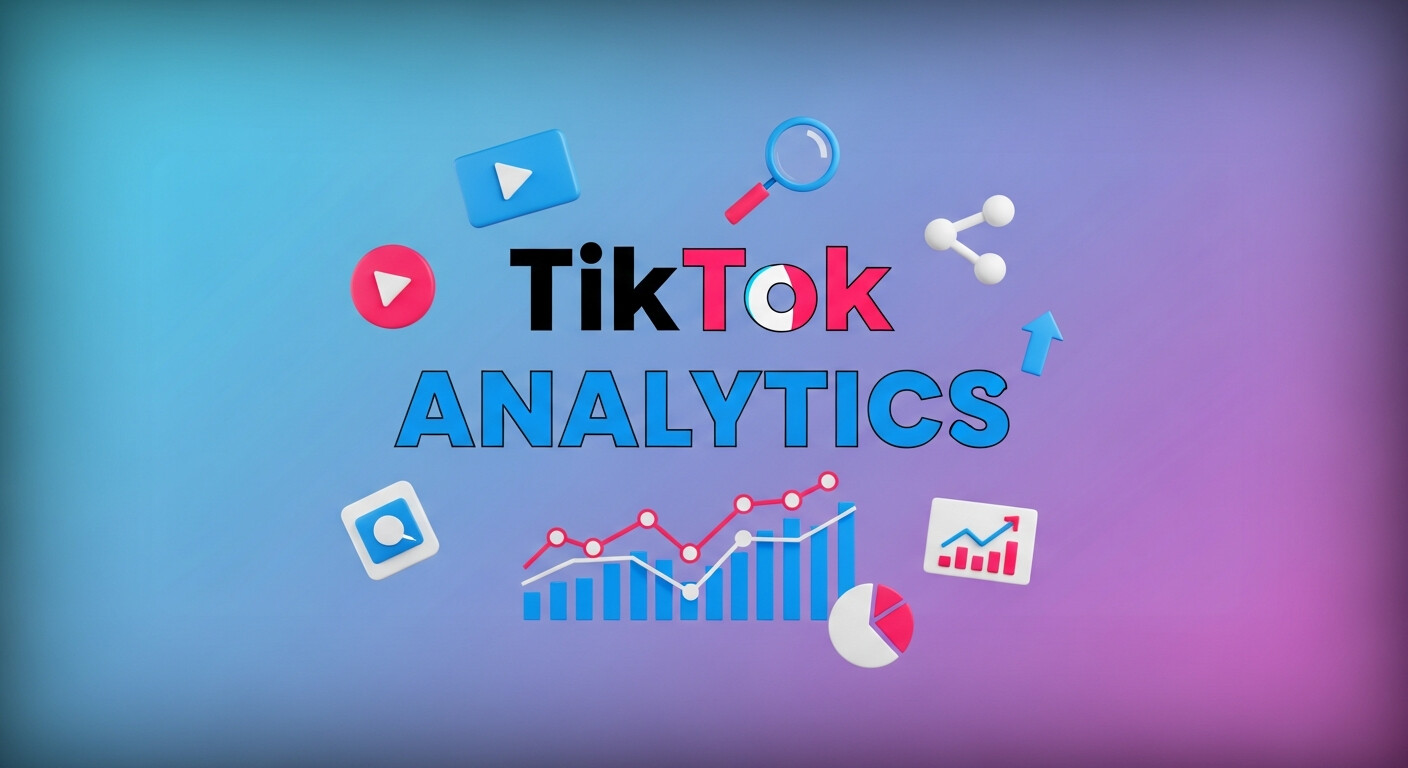
TikTok Analytics for Brands provides essential insights into audience engagement, video performance, and follower demographics. By analyzing these metrics, businesses can optimize content strategies, determine which videos resonate with users, and identify peak posting times. Understanding TikTok Analytics helps brands measure ROI from campaigns, track hashtag performance, and evaluate influencer partnerships. These insights also guide creative decisions, ensuring content aligns with audience preferences and brand goals. For companies targeting younger demographics, leveraging TikTok Analytics for Brands is a must to increase reach, engagement, and conversions while maintaining relevance in a fast-paced social media landscape.
Role of Data Marketing Analytics in Customer Segmentation
Data Marketing Analytics plays a crucial role in segmenting audiences based on behavior, demographics, and purchasing patterns. By analyzing data, marketers can identify high-value customers and tailor campaigns to meet their needs. Segmentation improves targeting accuracy, reduces wasted ad spend, and increases engagement rates. With precise insights from analytics tools, brands can create personalized messaging, product recommendations, and loyalty programs. Data Marketing Analytics also helps in predicting future behavior, enabling proactive strategies that enhance customer satisfaction and retention. Ultimately, this approach transforms generic marketing into highly focused campaigns that drive meaningful results.
Using Data Information Analysis for Market Research
Data Information Analysis strengthens market research by uncovering trends, competitor strategies, and customer preferences. Businesses can analyze surveys, social media activity, and sales data to make evidence-based decisions. This type of analysis helps identify gaps in the market, understand demand fluctuations, and forecast product performance. By integrating multiple data sources, companies can predict emerging trends and adjust strategies accordingly. Data Information Analysis reduces the risk of launching ineffective campaigns and enables brands to allocate resources efficiently. Businesses that prioritize thorough analysis gain a competitive edge by turning raw data into actionable insights.
Enhancing Social Media Campaigns with TikTok Analytics for Brands
TikTok Analytics for Brands allows marketers to track metrics like engagement rate, video views, watch time, and follower growth. With this information, campaigns can be fine-tuned to maximize reach and impact. Brands can test creative ideas, monitor trending content, and analyze audience behavior in real time. By using TikTok Analytics, companies can identify successful content types, optimize posting schedules, and collaborate with influencers more effectively. This ensures that campaigns are data-driven and performance-oriented. Leveraging these analytics not only increases visibility but also drives conversions and brand loyalty on one of the fastest-growing social media platforms.
Predictive Insights Through Data Marketing Analytics
Data Marketing Analytics is not just about analyzing past performance—it also enables predictive insights. By applying statistical models and AI tools, businesses can forecast customer behavior, sales trends, and campaign outcomes. These insights allow marketers to anticipate demand, optimize budgets, and create personalized offers. Predictive analytics helps companies make strategic decisions, reduce risks, and increase ROI. With advanced Data Marketing Analytics, brands can move from reactive to proactive marketing, ensuring they stay ahead of competitors. This approach transforms raw data into strategic foresight, enabling smarter planning and higher business growth.
Integrating Data Information Analysis Across Platforms
Integrating Data Information Analysis across multiple platforms—websites, social media, email, and sales systems—provides a holistic view of performance. This allows marketers to track campaigns end-to-end, measure customer interactions, and identify opportunities for optimization. Cross-platform analysis uncovers patterns that single-source analysis might miss, improving targeting, personalization, and overall strategy. Companies can combine insights from TikTok Analytics for Brands, website analytics, and email performance to align marketing efforts. This integrated approach ensures data-driven decisions, better resource allocation, and more impactful campaigns that resonate with audiences across all channels.
AI and Machine Learning in Marketing Analytics

AI and Machine Learning are transforming how businesses handle Data Marketing Analytics. These technologies analyze vast amounts of customer data to identify patterns, predict trends, and optimize campaigns automatically. With Data Information Analysis, AI can segment audiences, recommend personalized content, and forecast customer behavior with unmatched accuracy. For social media strategies, TikTok Analytics for Brands leverages machine learning algorithms to pinpoint trending content and measure engagement, helping brands craft data-driven campaigns. By integrating AI, companies reduce manual analysis, minimize errors, and enhance decision-making speed. Ultimately, AI and Machine Learning empower marketers to turn raw data into actionable insights, maximize ROI, and stay ahead in a competitive digital landscape.
Why the 4 Data Types Matter in the Real World
Knowing what are the 4 types of data is not just academic. It shapes how data is collected, analyzed, and presented.
In Business
Marketers use nominal data to categorize audiences, ordinal data to gauge customer satisfaction, interval data to track campaign performance, and ratio data to measure ROI.
In Healthcare
Doctors use ordinal scales for pain levels, interval scales for lab values, and ratio data for weight, dosage, and age. Each type serves a unique purpose and must be analyzed accordingly.
In Education
Student names are nominal, grades like A/B/C are ordinal, test scores can be interval or ratio depending on context. Misclassifying data can lead to incorrect interpretations.
Common Misunderstandings
It’s easy to confuse interval and ratio data. Both are numerical and allow for advanced calculations, but only ratio data has a true zero. That zero makes a big difference when analyzing trends or comparing groups.
Another mistake is treating ordinal data as interval. For example, assigning numbers to satisfaction levels (1 to 5) and then calculating the mean assumes equal distance between levels, which might not be accurate.
Understanding these boundaries helps avoid flawed conclusions.
How to Identify Each Data Type
If you’re unsure which type you’re dealing with, ask yourself:
-
Is there a natural order? If yes, it’s at least ordinal.
-
Can you measure the exact difference between values? If yes, it’s interval or ratio.
-
Does it have a true zero? If yes, it’s ratio. If not, it’s interval.
-
Are the values simply categories with no order? Then it’s nominal.
Correct identification ensures appropriate statistical methods and accurate interpretations.
Final Thoughts
So, what are the 4 types of data? They are nominal, ordinal, interval, and ratio — each with its own structure, rules, and use cases.
Understanding them is essential whether you’re reading a data report, designing a survey, running analytics, or building a research model.
Every piece of data you encounter fits into one of these categories. Misclassifying data leads to poor analysis, while correct classification leads to clear, confident decisions.
By mastering these data types, you not only improve your analytical skills but also gain a powerful lens to understand the world of information more clearly.
Frequently Asked Questions (FAQ) About the 4 Types of Data
1. What are the four types of data?
The four types of data are nominal, ordinal, interval, and ratio. Each type has unique characteristics that determine how it can be analyzed and interpreted.
2. What is nominal data?
Nominal data consists of categories without any natural order. Examples include gender, nationality, or the color of a car. You can count or calculate percentages but cannot perform meaningful arithmetic operations.
3. What is ordinal data?
Ordinal data shows rank or order but doesn’t measure exact differences between values. Examples include star ratings, education levels, or pain scales. Statistical analysis typically uses medians or modes.
4. What is interval data?
Interval data is ordered with equal differences between values, but it lacks a true zero. Examples include temperature (Celsius/Fahrenheit) or calendar dates. You can add or subtract values but not calculate meaningful ratios.
5. What is ratio data?
Ratio data has all interval data properties plus a true zero, allowing for full mathematical operations. Examples include height, weight, age, or salary. You can calculate ratios, differences, and percentages.
6. How do I identify the type of data I have?
Ask yourself:
-
Is there a natural order? → Ordinal or higher
-
Can you measure exact differences? → Interval or ratio
-
Is there a true zero? → Ratio
-
Are they just categories? → Nominal
7. Why is it important to know data types?
Correctly identifying data types ensures accurate analysis and interpretation, avoids statistical errors, and helps choose the right visualization, reporting, and research methods.
8. What are common mistakes when working with data types?
Common mistakes include treating ordinal data as interval (e.g., averaging satisfaction scores) or confusing interval and ratio data. Misclassification can lead to flawed conclusions.